
AI and Analytics in Clearing Accounts and Transaction Control
- Insivue

- Jun 22
- 5 min read
Clearing accounts have traditionally been seen as a technical bookkeeping tool — a place to temporarily park transactions until they are matched, allocated, or reconciled. But as businesses become more digital and transaction-heavy, this once “back-office” function is now being reshaped by AI and analytics into something far more strategic.
Modern businesses no longer deal with simple, linear transactions. Payments arrive in batches, merchant fees are deducted automatically, payroll is split across systems, and e-commerce platforms consolidate hundreds of transactions into single deposits. These layered flows create constant timing mismatches and reconciliation complexity.
AI and analytics are changing this by shifting financial management from manual reconciliation to intelligent transaction flow monitoring. Instead of simply matching bank feeds, systems can now analyse patterns, detect anomalies, and automatically categorise transactions with increasing accuracy.
This transforms clearing accounts from passive holding areas into active control points within an intelligent financial system.
In this post we will discuss about the role of AI and analytics in clearing accounts and transaction control
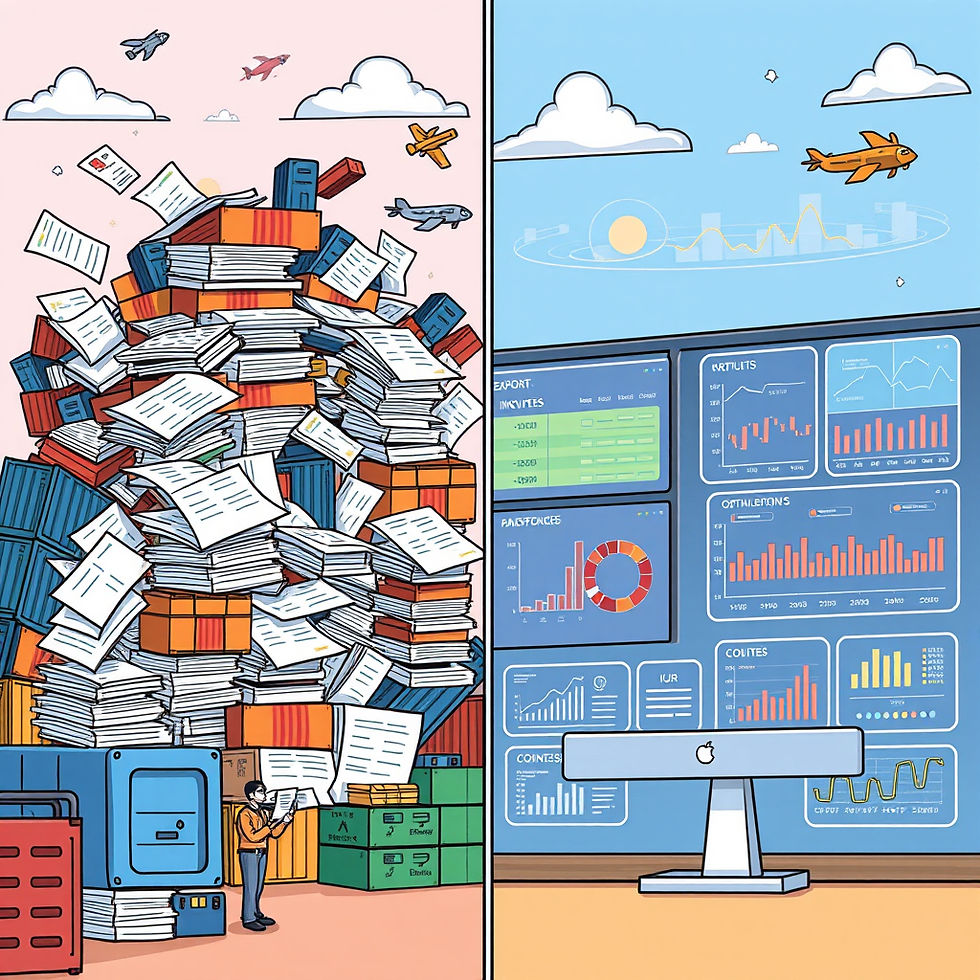
AI-Powered Visibility Across Complex Transaction Ecosystems
In a traditional setup, clearing accounts rely heavily on manual oversight. Finance teams must trace transactions across EFTPOS systems, payroll platforms, online payment gateways and bank feeds to ensure everything balances correctly.
AI introduces a fundamentally different approach. Machine learning models can now identify relationships between transactions even when they arrive in fragmented or delayed formats. For example, an EFTPOS settlement containing dozens of individual sales can be automatically decomposed, matched and reconciled against point-of-sale data without manual intervention.
Analytics dashboards then provide real-time visibility into these flows — showing not just where money sits, but how it is moving through the business ecosystem.
This shift allows finance teams to move from reactive reconciliation to proactive financial control.
Strengthening Accuracy Through Intelligent Anomaly Detection
One of the most powerful impacts of AI in clearing account management is anomaly detection. Instead of waiting for reconciliation issues to surface at month-end, AI systems can continuously scan clearing accounts for inconsistencies such as duplicate entries, missing settlements, unusual timing gaps or mismatched merchant deposits.
Analytics tools further enhance this by identifying patterns that humans may overlook — such as recurring settlement delays from specific payment providers or systematic discrepancies in payroll clearing cycles.
This reduces the risk of unresolved balances accumulating in clearing accounts and improves overall financial integrity. What was once a manual detective process is now becoming an always-on monitoring system.
Contra Transactions in an AI-Driven Accounting Environment
Contra and barter transactions introduce another layer of complexity that AI is increasingly helping to simplify. These transactions involve the exchange of goods or services without direct cash movement, often requiring dual recording of revenue, expenses and GST obligations.
Traditionally, these require careful manual handling to ensure compliance and correct reporting. However, AI-enabled accounting systems can now identify contra relationships automatically when invoices and bills are linked between entities.
Analytics also help validate whether GST treatment aligns with historical patterns and regulatory rules, reducing the likelihood of misclassification or reporting errors.
As business ecosystems become more collaborative and partnership-driven, AI is becoming essential in maintaining clarity in non-cash transaction environments.
From Suspense Accounts to Real-Time Exception Management
Suspense accounts have historically been used as a temporary holding space for unresolved or uncertain transactions. However, AI is fundamentally changing how these exceptions are handled. Instead of allowing transactions to sit unresolved, intelligent systems can now classify, suggest or automatically resolve many of these items based on historical behaviour and contextual data.
For example, unidentified bank deposits can be matched to expected customer payments, while unclear merchant fees can be mapped to known payment providers using predictive analytics.
This shifts suspense accounts from being passive holding areas to dynamic exception queues managed in real time. The result is fewer unresolved balances and a significant reduction in end-of-period reconciliation pressure.
Real-Time Analytics and the Future of Clearing Account Control.
The most significant transformation comes from real-time analytics. Instead of reviewing clearing accounts at the end of the month or financial year, businesses can now monitor transaction flows continuously. Dashboards provide live updates on EFTPOS clearing, payroll liabilities, customer deposits and payment gateway settlements. This level of visibility allows businesses to detect issues earlier, improve cash flow forecasting and reduce financial surprises during reporting periods.
It also enables more strategic decision-making. Businesses can understand how operational processes directly impact liquidity, settlement timing and working capital efficiency.
In this model, clearing accounts are no longer just accounting tools — they become data-driven operational control systems.
AI, Automation and the Reduction of Manual Reconciliation Work
One of the most immediate impacts of AI adoption is the reduction of manual reconciliation effort. Tasks that previously required hours of line-by-line checking — such as matching EFTPOS batches, reconciling payroll clearing accounts or tracking customer deposits — can now be automated through intelligent systems.
Automation handles repetitive matching and categorisation, while analytics provides oversight, exception reporting and trend identification.
This allows finance teams to shift their focus from transactional processing to higher-value financial analysis and advisory work. The role of bookkeeping evolves from data entry to data interpretation.
Strengthening Financial Integrity Through Intelligent Systems
As clearing accounts become more complex due to digital payments and multi-channel transactions, financial integrity becomes increasingly dependent on system intelligence rather than manual effort.
AI helps ensure that clearing accounts are not left with unexplained balances, suspense accounts are actively resolved, and contra transactions are properly documented and reported.
Analytics adds an additional layer by providing visibility into systemic issues that may not be visible at transaction level — such as recurring delays, operational inefficiencies or process breakdowns.
Together, they create a more resilient financial control environment.
From Transaction Management to Financial Intelligence
The evolution of clearing accounts reflects a broader shift in accounting itself.
What was once a purely administrative function is now becoming a data-driven financial intelligence layer within the business.
AI and analytics are not replacing accounting principles — they are enhancing them by adding speed, accuracy and predictive capability.
Businesses that adopt these tools early gain a clearer view of their financial operations, reduce reconciliation friction and improve decision-making confidence.
In an environment where transaction volumes, payment complexity and compliance requirements continue to grow, this shift is becoming increasingly important.
Turning Financial Complexity into Intelligent Control
Clearing accounts, contra transactions and suspense systems were originally designed to manage operational complexity. Today, AI and analytics are transforming them into intelligent financial control mechanisms.
Instead of simply recording transactions, businesses can now actively monitor, analyse and optimise how money moves through their systems.
If you want to explore how AI can specifically help your business, platforms like veunetics.ai provide advanced AI-powered financial insights and automation tailored for small businesses, accountants, and bookkeepers. This can help transform how you manage operational complexity, improve financial visibility, and make more confident, data-driven decisions that support growth and profitability.

In this article, we explored how AI and Analytics can turn operational and financial complexity into a strategic advantage. The same principles that apply to improving export efficiency also apply to strengthening internal financial control, transaction accuracy, and business performance. In a period of rising inflation and interest rates, leveraging analytics is no longer optional—it is a practical way to improve efficiency, reduce leakage, and build resilience. We discussed about the role of AI and analytics in clearing accounts and transaction control
Our focus is on helping businesses unlock measurable improvements through tailored data-driven solutions. Whether it is optimising pricing, improving service design, enhancing client relationships, tracking expenses more accurately, strengthening financial controls, or improving forecasting accuracy, AI-driven analytics provides a structured way forward. Even a simple ROI assessment can highlight where inefficiencies exist and where meaningful gains can be made.
We work with businesses to identify the right approach for their goals and operational context, helping them move from reactive decision-making to a more intelligent, insight-led model of execution. You can reach out to us and we can collaboratively look at solution that fits your needs!



Comments